
For thousands of years, the shaman has held a central role in communities across the world. Often misunderstood in the modern Western lens, a shaman is not simply a healer or a mystic—but a bridge walker. Someone who moves between the seen and unseen, carrying medicine, insight, and balance back to the people.
In this article, we explore who the shaman is—both in ancient traditions and in today’s evolving world—and how the shamanic path continues to bring deep healing to individuals and communities.
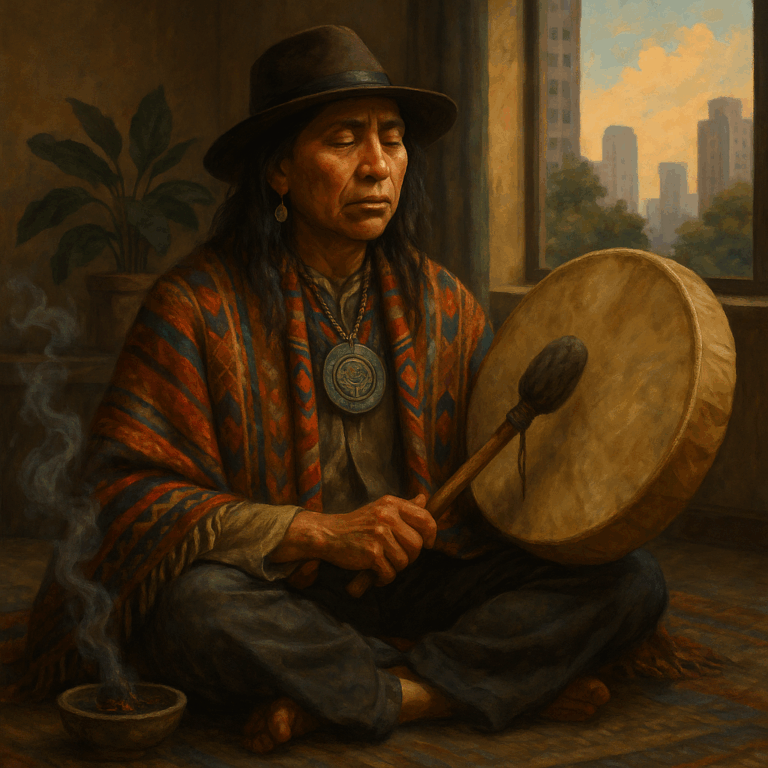
Who Is the Shaman?
The word “shaman” comes from the Tungus people of Siberia, but the essence of the shaman exists across cultures under different names:
P’aqo in the Andes
Curandero/a in the Amazon
Angakkuq in Inuit cultures
Noaidis in the Sámi tradition
While each lineage holds its own wisdom, shamans traditionally share a few core qualities:
They enter altered states of consciousness to receive guidance or healing from spirits.
They act as mediators between the spiritual and physical worlds.
They are called by Spirit, often after a profound illness, trauma, or spiritual initiation.
Their work is in service to the community, not for personal power.
Traditional Roles of the Shaman
In Indigenous cultures, the shaman’s work often includes:
Healing physical, emotional, or spiritual illness
Retrieving lost soul fragments (soul retrieval)
Divining messages from spirit guides or ancestors
Protecting the village from negative spiritual forces
Guiding ceremonies for birth, death, marriage, harvest, and more
Acting as teacher, oracle, and counselor
Their role was not separate from everyday life—it was woven into the fabric of the tribe.
The Shaman in the Modern World
In today’s world, the role of the shaman is changing—but not disappearing.
As humanity faces mental health crises, ecological destruction, and spiritual disconnection, many are awakening to ancient ways. The modern shaman may not live in a remote jungle or mountain village—but still serves a sacred role.
Today, the shaman may:
Hold healing sessions in cities, online, or retreat spaces
Help clients release trauma and reconnect with purpose
Facilitate breathwork journeys, drum ceremonies, or plant medicine integration
Support ancestral healing and karmic clearing
Teach spiritual tools to empower others
The essence remains the same: service to healing, to Spirit, and to the Earth.
Walking the Shamanic Path Today
To walk the path of a shaman is not about titles or performance—it is about surrender, service, and sacred responsibility.
You do not need to call yourself a “shaman” to live in connection with Spirit and honor Indigenous wisdom. You can:
Listen deeply to the land
Work with ceremony and prayer
Ask permission from the elements
Tend to your energy field with care
Remember you are not separate from the Earth
The world needs more of this remembrance.
Work with Me
At Ikon Sana, I carry this work with deep reverence for the teachers and elders I’ve studied with in the Andes and Amazon. If you feel the call to explore your path more deeply, you can:
🌀 Book a 1:1 shamanic healing session with me
🌿 Shop sacred tools like altar cloths, feathers, bells, and incense—all handmade in collaboration with Indigenous artisans
✨ Book a Session | Visit the Shop
The shaman is not a relic of the past. She lives in the wind, the bones, the songs of the trees.
She walks among us—in the wild woman reclaiming her voice, the man who chooses integrity, the child who remembers.
And in you, if you’re willing to listen.
Recent Comments