
Have you ever noticed how difficult it can be to maintain your spiritual practice during the long, dark Nordic winters? When the cold seeps into your bones and the wind cuts through layers of clothing, your energy field becomes vulnerable in ways that practitioners in warmer climates rarely experience. For spiritual seekers in Nordic regions, understanding how sacred textiles and ceremonial garments offer energetic protection isn’t merely about cultural appreciation, it’s about practical survival of your spiritual practice. Indigenous traditions from around the world, particularly those that honour the consciousness of natural materials, offer profound wisdom for protecting and nurturing your energy field in harsh climates. This article explores how ceremonial clothing functions as more than physical warmth, creating energetic boundaries that support deeper meditation, breathwork, and shamanic practices even when nature itself seems to conspire against your inner work.
What makes textiles energetically protective?
Sacred textiles function as energetic boundaries by creating a distinct field between your personal energy and the external environment. Unlike ordinary clothing designed solely for physical protection, ceremonial garments are created with intention, often through processes that involve prayer, song, or specific rituals during their making. This intentional creation imbues the fabric with what indigenous traditions recognise as material consciousness, the understanding that everything in nature possesses awareness and can interact with spiritual energies.
The fundamental difference between ceremonial clothing and everyday garments lies in three key principles. The materials themselves carry inherent energetic properties based on their origin and how they were harvested. Natural fibres maintain a living connection to the earth, unlike synthetic materials that create energetic static or interference. The creation process matters profoundly, as handcrafted textiles woven with sacred songs or prayers, similar to how icaros (sacred healing songs) affect energy through sound and intention in ceremonial contexts, carry the maker’s spiritual focus within their very threads.
Sacred textiles serve as both physical and spiritual armour, creating a protective field that allows your energy to remain centred whilst you navigate challenging environmental conditions.
When you wear ceremonial garments during energy work or meditation, you’re essentially wrapping yourself in a field that has been intentionally charged to support spiritual practice. This isn’t metaphorical, indigenous wisdom traditions view the interaction between fabric and energy field as a tangible, experiential reality that practitioners can learn to sense and work with consciously.
How Nordic cold affects your energy field
The relationship between physical cold and energetic depletion becomes immediately apparent to anyone attempting deep spiritual work in Nordic climates. When your body struggles to maintain physical warmth, it redirects vital energy away from subtle energy centres, making it considerably more difficult to achieve the states of consciousness necessary for meditation, breathwork, or shamanic journeying. The harsh climate doesn’t simply challenge your physical comfort, it fundamentally alters your energetic capacity.
Nordic practitioners face unique obstacles that their counterparts in temperate or tropical regions rarely encounter. The extended darkness of winter months affects not only mood but also the natural flow of energy through your system. Cold air creates a contracting effect on your energy field, pulling it closer to your physical body rather than allowing the expansive states that facilitate spiritual connection. Wind, particularly the biting Nordic winds, can scatter or fragment your energy field, making it difficult to maintain the focused coherence needed for ceremonial work.
Consider how different your meditation practice feels on a warm summer evening compared to a freezing January morning. The physical discomfort is obvious, but the energetic challenge runs deeper. Your body’s survival mechanisms prioritise physical warmth over spiritual openness, creating an internal conflict that can block the very states you’re seeking to cultivate. This is where understanding protective spiritual wear becomes essential rather than optional for serious practitioners in Nordic regions.
Sacred materials that hold protective energy
Natural fibres possess distinct energetic properties that make them particularly suitable for spiritual clothing. Wool, especially from sheep raised with care and respect, carries grounding and protective qualities that help anchor your energy field even in challenging conditions. The lanolin naturally present in wool creates a subtle energetic barrier whilst allowing your field to breathe, preventing the stagnation that can occur with synthetic materials.
Cotton, particularly when grown and processed without harsh chemicals, offers a neutral, receptive quality that makes it ideal for practices requiring energetic openness. Plant-based textiles like hemp or linen maintain a strong connection to earth energies, supporting practices focused on grounding and environmental connection. The significance of handcrafted versus mass-produced items cannot be overstated, factory-made clothing carries the energetic imprint of industrial processes, whilst handwoven textiles hold the intention and care of their makers.
Shipibo textiles from the Amazon region offer particularly powerful examples of sacred weaving traditions. These geometric patterns, known as kené, are considered visual representations of the songs and visions experienced by Shipibo healers. When adapted for Nordic use, these textiles bring the energetic wisdom of Amazonian plant medicine traditions into cold climate spiritual practice. The patterns themselves function as energetic maps, creating protective fields through their geometric precision and sacred symbolism.
Why patterns and symbols amplify protection
Geometric patterns and sacred symbols function energetically by creating resonance fields that interact with your personal energy system. The Shipibo cosmic maps mentioned earlier aren’t merely decorative, they represent specific energetic frequencies that the patterns themselves generate. When you wear clothing bearing these symbols, you’re essentially wrapping yourself in a field of organised energy that supports coherence and protection.
Indigenous traditions worldwide recognise that visual patterns create measurable effects on consciousness and energy. Repetitive geometric designs can induce meditative states, whilst specific symbols act as focal points for intention and protection. The relationship between intentional design and energetic amplification works through a principle similar to how sound creates form, the pattern itself generates and maintains a specific energetic signature.
Protective symbols from various indigenous traditions, whether Nordic runes, Amazonian geometric designs, or Andean patterns, share common principles. They create boundaries, establish sacred space, and amplify the wearer’s intention. When incorporated into ceremonial garments, these patterns transform simple clothing into active tools for energy work, constantly generating protective fields without requiring conscious effort from the practitioner.
Integrate ceremonial textiles into daily practice
Selecting appropriate textiles for different spiritual practices requires understanding both your intention and the energetic qualities of various materials. For grounding practices and earth-based work, choose heavier natural fibres like wool or hemp. For breathwork and practices requiring energetic expansion, lighter cotton or linen allows greater flow. When working with plant medicines or shamanic practices that honour Amazonian traditions, incorporating textiles with sacred patterns creates continuity with the lineages you’re learning from.
Respectfully incorporating indigenous textile wisdom means understanding the cultural context of patterns and materials. If you’re drawn to Shipibo designs, take time to learn about their significance and the tradition they come from. This isn’t about cultural appropriation, it’s about approaching these sacred tools with the integrity they deserve. Consider supporting indigenous artisans directly, ensuring that your practice honours both the spiritual and economic wellbeing of the communities preserving these traditions.
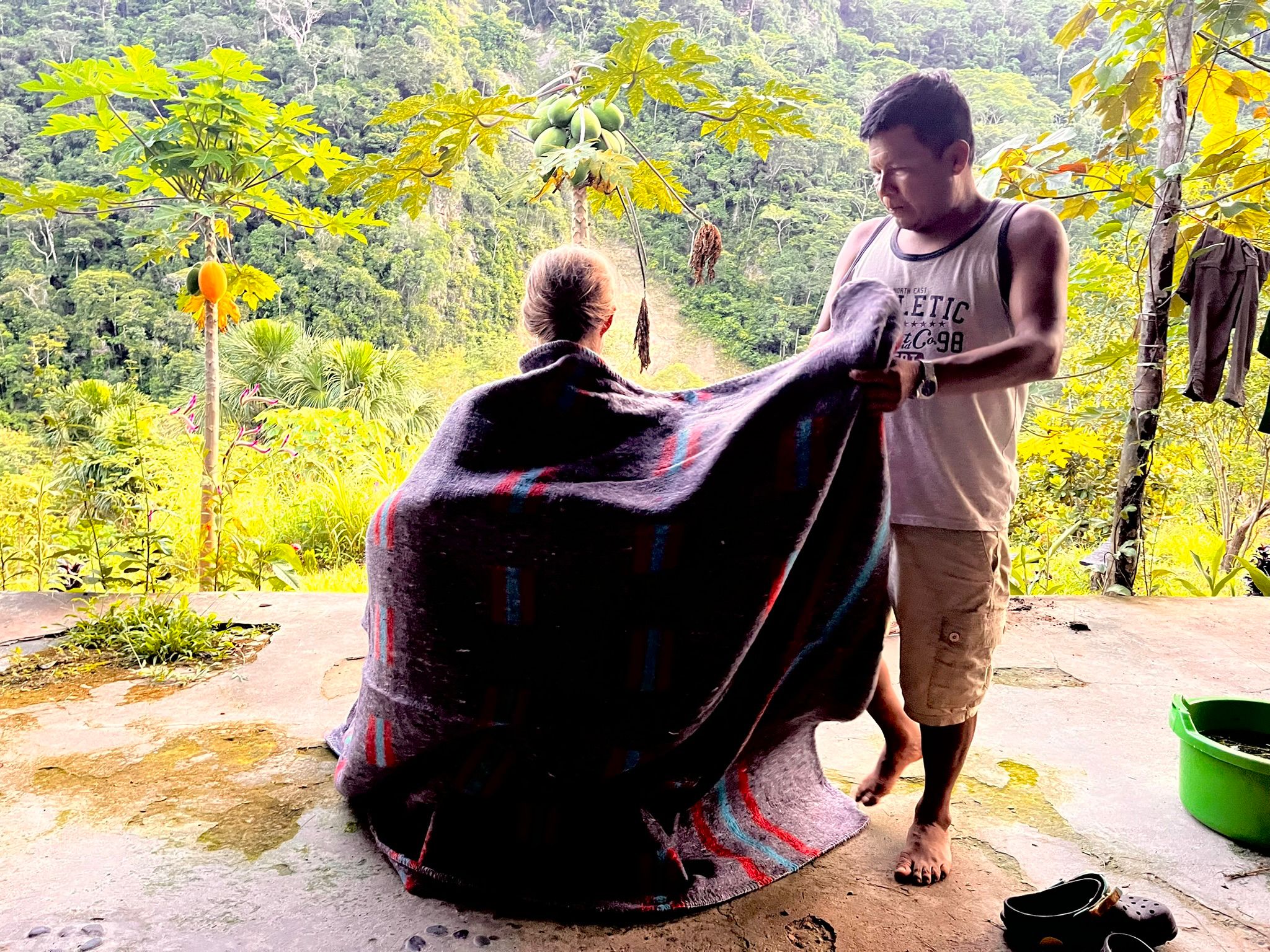
Maintaining energetic integrity in Nordic climates requires layering sacred textiles strategically. A base layer of natural fibre worn directly against skin creates the primary energetic boundary. Outer layers can incorporate protective symbols or patterns, creating multiple fields of protection. During meditation or ceremony, wrapping yourself in a dedicated shawl or blanket made from sacred textiles signals to your consciousness that you’re entering protected space, supporting deeper states more readily.
Care for sacred textiles energetically and physically
Maintaining both the material and energetic qualities of ceremonial garments requires regular attention. Physical care follows natural principles, hand washing with gentle, plant-based soaps preserves the fibres and their energetic properties. Avoid harsh detergents or bleaches that strip away not only natural oils but also the subtle energetic charge the textiles carry. Air drying in sunlight when possible allows natural cleansing through solar energy, whilst moonlight exposure can recharge textiles used for lunar or feminine practices.
Energetic cleansing practices should occur regularly, particularly after intensive spiritual work or when textiles feel heavy or depleted. Smudging with sacred herbs, similar to the energy cleansing practices used in Andean traditions, clears accumulated energies whilst maintaining the textile’s protective charge. Sound cleansing with bells, singing bowls, or even your own voice can refresh the energetic field of your garments without physical washing.
Storage methods significantly affect how well ceremonial textiles maintain their energetic integrity. Keep sacred garments separate from everyday clothing, preferably wrapped in natural fabric or stored in wooden boxes. This prevents energetic contamination from the scattered, unfocused energy of daily life. In Nordic climates where moisture can be an issue, ensure storage areas remain dry whilst avoiding artificial heating that can damage natural fibres. Regular airing and intentional handling, treating your sacred textiles with reverence even when not in use, helps maintain their protective properties over years of practice.
The journey of working with sacred textiles and ceremonial garments in Nordic climates connects you to ancient wisdom traditions whilst addressing the very practical challenges of maintaining spiritual practice in harsh conditions. As you deepen your relationship with these sacred tools, you’ll discover that the protection they offer extends beyond mere warmth, they become companions in your spiritual journey, holding space for your practice even when external conditions seem impossible. What will you notice about your energy field the next time you consciously choose sacred textiles for your meditation or ceremony?
Recent Comments